

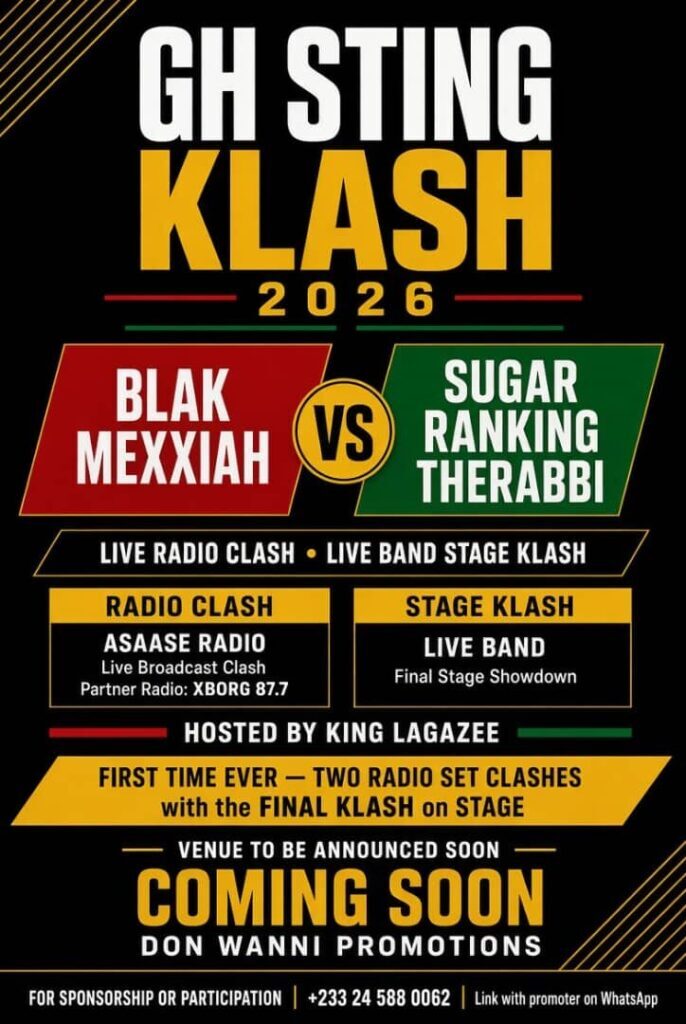
Ghanaian reggae-dancehall veteran Blak Mexxiah has called for the preservation and development of Ghana Dancehall Klash, describing the lyrical competition as an important platform for discovering talent, strengthening artistic creativity and creating opportunities for young musicians.
In a statement titled “Don’t Kill the Game: Defend and Elevate Ghana Dancehall Klash,” the musician argued that the culture of musical clashes should not be mistaken for hatred or an invitation to violence.
Instead, he believes Ghana should establish appropriate guidelines to protect the competitive spirit of dancehall while preventing personal hostility and misconduct.
Dancehall Clash Is a Competition of Talent, Not Violence
According to Blak Mexxiah, Ghana’s dancehall clash culture draws inspiration from Caribbean traditions, particularly Jamaica, but has developed characteristics of its own.
He explained that Ghanaian performers generally use lyrical skill, clever verbal exchanges and sharp observations to challenge fellow artists.
The objective, he argued, is to demonstrate musical ability, creativity and confidence under pressure rather than encourage violence.
For Blak Mexxiah, the competitive environment is comparable to a sporting contest in which participants test their abilities against one another.
He believes the public must understand the distinction between artistic rivalry and genuine personal hostility.
A Platform That Has Helped Build Music Careers
Blak Mexxiah also highlighted the historical contribution of lyrical clashes to Ghana’s dancehall movement.
He argued that several successful dancehall performers developed their confidence, stage presence and audiences through competitive performances before gaining wider recognition.
In his assessment, eliminating such opportunities would disadvantage emerging musicians who do not have access to major promotional platforms.
The veteran artiste questioned why a system that has helped develop performers should be abandoned instead of improved.
Opportunities for Ghana’s Emerging Dancehall Artists
Another major concern raised in the statement is the limited number of opportunities available to young musicians.
Blak Mexxiah believes Ghana has thousands of aspiring dancehall artists with the potential to succeed but without adequate exposure.
He sees organised lyrical competition as one possible avenue through which these performers can develop their craft, attract audiences and establish professional careers.
He also connected the discussion to the wider challenge of youth unemployment, arguing that properly managed entertainment platforms could create productive opportunities for young people.
However, the statement did not provide figures establishing how many musicians have secured employment or sustainable income specifically through dancehall clashes.
Why Blak Mexxiah Compares Dancehall Klash to Boxing
One of the central arguments in the musician’s statement is that competitive dancehall should be treated with the same seriousness as other organised competitions.
He drew a comparison with boxing, a sport involving physical confrontation that operates under established rules, professional oversight and disciplinary procedures.
Blak Mexxiah believes a similar approach could help Ghana’s dancehall clash culture develop without losing its artistic identity.
Such an approach, as outlined in his statement, would involve clear boundaries, accountability and opportunities for performers to respond appropriately when those boundaries are crossed.
His argument is not that every lyrical attack should be accepted. Rather, he believes the culture should be guided so that creativity remains the focus.
Competition Can Strengthen Creativity
The musician also challenged opposition to lyrical clashes, suggesting that some critics misunderstand the artistic nature of the competition.
He argued that genuine talent benefits from being tested publicly and that performers should learn to withstand creative pressure.
In his view, competition encourages preparation, discipline, strategic thinking and improved performance.
Although his statement was critical of artists who seek to undermine the culture, he did not identify specific individuals or provide evidence against any named performer.
The broader message was that musical competition should not automatically be treated as a threat to unity within the entertainment industry.
A Call for Regulation, Respect and Unity
Despite his defence of dancehall clashes, Blak Mexxiah emphasised that the culture must operate within reasonable boundaries.
He called for sportsmanship, respect and unity to remain central to its development.
The musician believes that properly organised events could strengthen Ghana’s reggae-dancehall ecosystem while offering young performers a platform to demonstrate their abilities.
His concluding message was straightforward:
“We should not kill the game. We should guide it, refine it, and expand it.”
For Ghana’s music industry, his intervention raises an important question: should lyrical clashes be discouraged because of their potential to generate controversy, or should organisers establish stronger standards that allow competition and artistic expression to coexist?
Blak Mexxiah’s position is clear. He believes Ghana Dancehall Clash deserves development, not destruction.
This report is based on a written commentary attributed to Ghanaian reggae-dancehall musician Blak Mexxiah. The views expressed are his arguments and should not be interpreted as independently established findings about the industry’s economic impact.

Leave a Reply