
AFRICA NEWS | INFRASTRUCTURE | NIGERIA

The Lagos–Calabar Coastal Highway is one of Nigeria’s most ambitious infrastructure projects, designed to establish a major road corridor along the country’s southern coastline.
The proposed highway will connect Lagos, Nigeria’s commercial capital, with Calabar in Cross River State, potentially improving transportation, tourism, commercial activity and regional economic integration.
The project has also attracted considerable public attention over its construction costs, environmental implications, land acquisition and procurement arrangements.
Nigeria Confirms Progress on 750km Lagos–Calabar Coastal Highway Amid Abandonment Rumours
Nigeria’s Federal Government has reaffirmed its commitment to completing the 750-kilometre Lagos–Calabar Coastal Highway following public speculation that parts of the project could be abandoned or redirected.
Minister of Works David Umahi, speaking on October 12, 2026, dismissed claims that President Bola Tinubu had ordered the coastal route to be discontinued in favour of the existing East–West Road.
According to the minister, the East–West Road reconstruction is an additional infrastructure project, not a replacement for the proposed coastal highway.

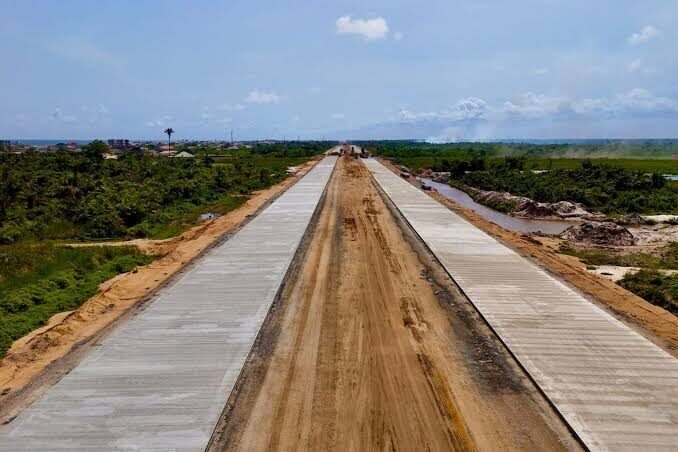
First 47km completed as construction continues
In an October 7 briefing, Umahi announced that the first 47-kilometre section of the coastal highway had been completed, while substantial progress had been recorded on the approximately 55-kilometre second section.
The minister said pavement work on Section Two was approaching completion, although major flyovers, underpasses and related engineering structures remained under construction.
On October 12, he indicated that the second section was expected to reach completion around mid-November 2026.
Construction and preparatory work are also proceeding on other portions of the route, including sections in Ogun, Ondo, Akwa Ibom and Cross River states.
A major transport corridor across nine states
The proposed highway is intended to connect nine Nigerian states: Lagos, Ogun, Ondo, Edo, Delta, Bayelsa, Rivers, Akwa Ibom and Cross River.
The government expects the completed corridor to improve access to ports, industrial centres, agricultural communities and tourism destinations.
Its potential economic benefits include faster movement of goods, improved regional connectivity and employment during construction.
However, those long-term gains will depend on the completion of the remaining sections, effective maintenance and the development of connecting roads.
fmino.gov.ng
Engineering challenges and route adjustments
The project has encountered difficult terrain, drainage requirements and the need to accommodate existing infrastructure.
Around the Lekki industrial corridor, engineers have had to account for developments associated with the Dangote Refinery and Lekki Deep Seaport.
In Ondo State, difficult ground conditions have also required adjustments to parts of the alignment.
The Ministry of Works maintains that these technical modifications are intended to improve the highway’s durability and integration with other transport facilities.
fmw.gov.ng
Environmental concerns and public accountability
Beyond its economic promise, the highway has generated questions about coastal flooding, environmental protection, property acquisition and compensation.
In July 2026, Umahi rejected allegations that the project was responsible for flooding in parts of Lagos, arguing that drainage improvements formed part of the highway’s design.
Nevertheless, the project’s coastal location makes environmental monitoring and effective drainage particularly important.
The government will also face continued scrutiny over expenditure, procurement transparency and the treatment of communities affected by construction.
Will the Lagos–Calabar Coastal Highway be completed?
The government’s latest statements indicate that construction remains active, but completion of the entire 750-kilometre corridor has not yet been achieved.
Surveying, design and procurement activities are still required for portions of the route, including areas between Ondo and Akwa Ibom.
While the completion of the Lagos section represents a significant milestone, the project’s ultimate success will be measured by whether the entire corridor becomes operational and delivers its promised economic benefits.
For Nigeria and the wider West African region, the Lagos–Calabar Coastal Highway could become an important transport asset. Its full impact, however, will only be clear when the remaining construction, environmental and financial challenges have been addressed.
Sources: Channels Television, October 12, 2026 · Voice of Nigeria, October 12, 2026 · Federal Ministry of Works.

Leave a Reply